


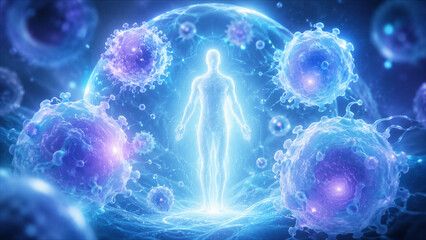
NAD+ and Immune Resilience: How Cellular Energy Affects Your Body's Defense System


EllieMD
5 min read
The immune system is one of the most energy-demanding systems in the body. Here is what the research shows about how NAD+ levels affect immune function and why supporting them matters as you age.
The immune system is extraordinarily energy-intensive. When immune cells activate in response to a pathogen, their energy demands increase dramatically. T-cells proliferating in response to an infection increase their metabolic activity many times over baseline. Natural killer cells hunting infected or malignant cells run on continuous high-energy demand. Dendritic cells processing antigens and orchestrating the immune response require substantial and sustained ATP production.
This energy dependence creates a direct link between NAD+ status and immune function that is increasingly well documented in research, and it is distinct from the aspects of NAD+ covered in the brain fog and anti-aging articles.
How NAD+ Powers Immune Cell Function
NAD+ sits at the center of the metabolic pathways that power every cell, and immune cells are no exception. When a T-cell or natural killer cell activates, the surge in metabolic demand it creates requires rapid upregulation of oxidative phosphorylation in the mitochondria, the process that NAD+ is central to as an electron carrier.
Research has shown that immune cell activation produces a rapid decline in intracellular NAD+ levels as the molecule is consumed faster than it can be regenerated. Cells with adequate NAD+ reserves at the start of activation can sustain the metabolic surge required for effective immune response. Cells with depleted NAD+ cannot maintain the same activation intensity, producing a blunted immune response.
This mechanism is particularly relevant to aging because NAD+ levels decline with age in all tissues, including immune cells. Aged immune cells have lower baseline NAD+ and less capacity for NAD+ regeneration during activation. This is one of the cellular mechanisms underlying immunosenescence, the decline in immune function that characterizes aging and that produces increased susceptibility to infection, reduced vaccine response, and impaired cancer immune surveillance.
Sirtuins, NAD+, and Immune Regulation
Beyond direct energy production, NAD+ is required for sirtuin activity, and sirtuins play a regulatory role in immune function that is separate from their metabolic effects.
SIRT1 and SIRT3, two sirtuin family members with well-characterized roles in aging biology, regulate the inflammatory response of immune cells. When sirtuins are adequately active, they help resolve inflammation after an acute immune response rather than allowing it to persist into the chronic low-grade inflammation associated with aging. As NAD+ declines and sirtuin activity falls, this regulatory brake on chronic inflammation weakens.
This connects NAD+ status to inflammaging, the persistent low-grade inflammatory state that drives accelerated biological aging, through the sirtuin pathway. Supporting NAD+ levels maintains sirtuin activity, which helps maintain the immune system's ability to mount acute responses and then appropriately resolve them.
The Vaccine Response Relevance
One of the most clinically actionable dimensions of NAD+ and immune function research is the vaccine response in older adults. Older adults consistently show weaker antibody responses to vaccines compared to younger adults, a phenomenon called immunosenescence that reduces the protective benefit of vaccination.
Research examining whether NAD+ precursor supplementation can improve vaccine response in older adults is ongoing. A study in Cell Reports found that nicotinamide riboside supplementation improved aspects of immune function in older adults in ways consistent with improved vaccine response. The data is preliminary but mechanistically coherent.
For patients on EllieMD's longevity program who are concerned about their immune resilience as they age, NAD+ support is one component of a comprehensive approach that may include thymosin alpha-1 for more direct immune modulation, as covered in the thymosin article. The two approaches work through different mechanisms and can be complementary. Your physician determines which combination is appropriate for your specific health picture.
Learn more at the EllieMD YouTube Channel.
Individual results may vary. All prescriptions require approval by a licensed medical provider. Compounded medications are not FDA-approved. EllieMD facilitates access to independent healthcare providers and pharmacies and does not provide medical care or dispense medications.
Related Articles
NAD+ Nasal Spray vs IV Therapy: A Clinical Comparison
EllieMD
Starting Longevity Medicine in Your 30s: Why Earlier Changes the Outcome
EllieMD

The Longevity Case for Resistance Training: What the Research Actually Shows
EllieMD

Sermorelin vs. HGH: Which Is Better for Longevity?
EllieMD

Methylene Blue for Brain Health: Cognitive Benefits and What the Research Shows
EllieMD
NAD+: Benefits, How It Works, and Delivery Methods Explained
EllieMD
Get the latest updates and exclusive offers by subscribing to our newsletter.
© 2026 EllieMD LLC. All rights reserved.
