


What Is Bremelanotide? The Science Behind PT-141


EllieMD
5 min read
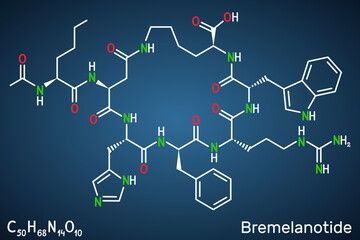
Bremelanotide is a synthetic peptide that became the subject of serious pharmaceutical interest after researchers discovered something unexpected in early clinical trials: subjects reported significant increases in sexual desire. What began as research into a tanning agent became the basis for the first FDA-approved non-hormonal treatment for hypoactive sexual desire disorder (HSDD) in premenopausal women. Understanding the bremelanotide peptide, what it is and how it works, gives you a foundation for an informed conversation with your physician about whether it belongs in your care.
Where Bremelanotide Comes From
Bremelanotide was developed from a molecule called melanotan II, which was itself derived from alpha-melanocyte stimulating hormone (alpha-MSH), a naturally occurring peptide in the body. Alpha-MSH plays roles in pigmentation, appetite regulation, and sexual function through its action on melanocortin receptors.
Early research on melanotan II as a tanning agent found that male subjects in trials reported spontaneous erections alongside the tanning effect, which prompted researchers to investigate the sexual function pathway more systematically. Bremelanotide was developed as a more selective and clinically refined version of this compound, specifically targeting the sexual function application.
The FDA approved bremelanotide in 2019 under the brand name Vyleesi for the treatment of HSDD in premenopausal women. It remains the only approved medication in this class for women, and the only non-hormonal prescription option for this condition.
How Bremelanotide Works in the Body
The mechanism of bremelanotide is central to understanding why it is different from other approaches to sexual health. Most medications used in sexual function (like sildenafil in men) work peripherally, by affecting blood flow to genital tissue. Bremelanotide works centrally, through the brain.
The bremelanotide peptide activates melanocortin receptors, particularly MC1R and MC4R, in the central nervous system. These receptors are involved in neural pathways that regulate sexual motivation and arousal. By stimulating them, bremelanotide produces an increase in desire that originates from the brain's own reward and motivational circuitry rather than from peripheral vascular effects.
This central mechanism is what makes bremelanotide meaningfully different from hormonal approaches to HSDD. It does not raise or lower estrogen or testosterone. It does not work through the hormonal system at all. This distinction matters clinically for women who want to address low desire without altering their hormonal environment, whether because of contraindications, previous negative experiences with hormonal interventions, or personal preference.
What the Clinical Evidence Shows
The FDA approval of bremelanotide was based on the RECONNECT trial program, two large randomized, placebo-controlled studies in premenopausal women with HSDD.
The trials measured two primary outcomes: change in the number of satisfying sexual events per month, and change in distress related to low sexual desire. Women receiving bremelanotide showed statistically significant improvements in both compared to placebo. The improvement in satisfying events averaged approximately 0.7 additional events per month over placebo. Distress scores on validated scales decreased meaningfully.
The side effect profile observed in the trials was important to the clinical picture. Nausea was the most common side effect, affecting roughly 40% of women who received bremelanotide. Flushing was also commonly reported. A transient blood pressure effect, an initial decrease followed by an increase that resolves within hours, was observed and is the basis for the cardiovascular contraindication.
For more on what using PT-141 looks like in practice for women, see our article on PT-141 for women. For guidance on the clinical consultation process, our sexual health program overview explains how EllieMD approaches this.
Who Is a Candidate for Bremelanotide
Bremelanotide is indicated for premenopausal women with HSDD, which is defined clinically as low sexual desire that causes personal distress. The distress component is part of the clinical definition for an important reason: low desire relative to a partner, or lower desire than the individual previously experienced, does not on its own constitute a disorder. The element that makes it a medical concern is the distress it causes the patient.
Contraindications include significant cardiovascular disease and uncontrolled high blood pressure, given the blood pressure effects observed in trials. Women who are pregnant or trying to conceive are not candidates. A thorough physician evaluation reviews these and other relevant factors before any prescription is considered.
The medication is not indicated for postmenopausal women, though off-label discussions in that population do occur. It is also not FDA-indicated for men, though it has been studied in male sexual dysfunction contexts.
What Makes Bremelanotide Distinct in Sexual Medicine
The fact that bremelanotide received FDA approval for a female sexual dysfunction indication at all represents a significant milestone. The history of FDA-approved treatments for female sexual dysfunction is short. Flibanserin (Addyi), approved in 2015, was the first. Bremelanotide was the second, and the only one that works non-hormonally.
This matters practically because it expands the options available to women whose low desire is not hormonally driven, or for whom hormonal interventions have not been effective or appropriate. The central, non-hormonal mechanism is genuinely novel in this space.
EllieMD's sexual health program includes physician consultation specifically around sexual health concerns, with the clinical expertise to evaluate whether bremelanotide is appropriate for your situation. See our detailed PT-141 dosage guide for more on what the clinical process looks like once treatment is determined to be appropriate.
Learn more at the EllieMD YouTube Channel.
Individual results may vary. All prescriptions require approval by a licensed medical provider. Compounded medications are not FDA-approved. EllieMD facilitates access to independent healthcare providers and pharmacies and does not provide medical care or dispense medications.
Related Articles

PT-141 Dosage Guide: How Much, How Often, and What to Expect
EllieMD

PT-141 for Women: How Bremelanotide Works and What to Expect
EllieMD

The Ultimate Release: Meet Elate Spray
EllieMD
02/12/2026 - 5 min read
What is The Thrill Pill?
EllieMD
08/14/2025 - 5 min read
Unlocking Desire: How PT-141 Works to Enhance Sexual Health
EllieMD
12/10/2024 - 5 min read
Protein: Your Key Ally in Weight Management
EllieMD
05/17/2024 - 5 min readGet the latest updates and exclusive offers by subscribing to our newsletter.
© 2026 EllieMD LLC. All rights reserved.
