


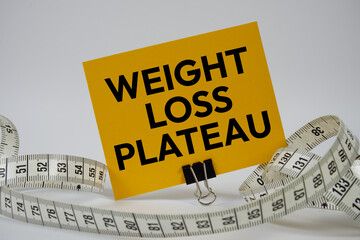
Why Weight Loss Plateaus Happen and What Actually Breaks Them


EllieMD
5 min read
Every sustained weight loss program hits a plateau. Here is the biology behind why the scale stops moving, what it means, and the interventions that actually work to move past it.
Sustained weight loss programs eventually produce a plateau, and GLP-1 therapy is not an exception. At some point, the scale stops moving despite the patient continuing medication and making the same dietary choices that were producing progress. This is one of the most frustrating experiences in weight management, and it is also one of the most misunderstood.
The plateau is not a sign that the medication stopped working. It is a sign that the body's adaptive systems have partially compensated for the caloric deficit. Understanding the biology of this compensation explains both why it happens and what options exist for addressing it.
What Happens Biologically When Weight Loss Stalls
When caloric intake falls below expenditure and weight begins to drop, the body responds with a coordinated set of metabolic adaptations designed to resist continued weight loss. This is the defended set point in action, the same biological system described in the obesity-as-disease article.
Adaptive thermogenesis is the primary mechanism. As weight falls, resting metabolic rate decreases by more than would be predicted from the loss of metabolically active tissue alone. A person who has lost 15 percent of body weight may have a resting metabolic rate that is 10 to 15 percent lower than the metabolic rate of a person who was always at that lower weight. The body is burning fewer calories at rest as a direct adaptation to the threat of continued weight loss.
At the same time, hunger hormones including ghrelin typically rise during sustained weight loss, even on GLP-1 therapy. The GLP-1 receptor activation partially suppresses this hormonal response, which is why GLP-1 patients experience less hunger than patients losing weight through diet alone. But it does not completely eliminate the adaptive hormonal response. Over time, the appetite suppression that was achieving a significant caloric deficit becomes somewhat less complete as the hormonal counterpressure builds.
The combination of reduced resting metabolic rate and partially restored appetite means that the same dose of medication, the same eating pattern, and the same activity level that was producing a 500 to 700 calorie daily deficit in the early months of treatment may be producing little to no deficit months later.
What Does Not Break a Plateau
Several common responses to plateaus are ineffective or counterproductive.
Cutting calories further from an already significantly restricted intake rarely breaks a plateau because the body responds to greater restriction with greater metabolic adaptation. The deficit does not persist at the magnitude intended because the metabolic rate falls further to compensate.
Weighing yourself more frequently does not break a plateau and typically worsens the psychological response to it. Scale weight can stall for weeks due to fluid shifts, menstrual cycle effects in women, constipation, and increased muscle from exercise, none of which reflect the actual fat loss or gain picture. Weekly weigh-ins at the same time of day under the same conditions are more meaningful than daily fluctuations.
Stopping the medication out of frustration often leads to rapid regain rather than breaking the plateau.
What Actually Works
A protocol adjustment with physician guidance is the most productive first response to a genuine plateau. Several directions are worth discussing with your EllieMD care team.
Dose adjustment within the prescribing framework may be appropriate if you have not reached the maximum therapeutic dose and are tolerating your current dose well. Higher doses of GLP-1 medications produce greater appetite suppression in a dose-dependent relationship, which can re-establish a meaningful caloric deficit after adaptation to a lower dose.
Introducing resistance training or increasing its intensity and consistency produces lean mass that elevates resting metabolic rate, partially counteracting adaptive thermogenesis. This is one of the most physiologically sound responses to a weight loss plateau because it addresses the metabolic rate reduction directly.
Reviewing protein intake specifically, not just total calories, often reveals a practical gap. Patients in a plateau frequently find that protein has drifted lower than intended. Restoring adequate protein supports both lean mass maintenance and satiety in ways that can re-establish forward progress.
Evaluating thyroid function is appropriate for patients whose plateau appeared unexpectedly early or is accompanied by fatigue, cold intolerance, or other hypothyroid symptoms. Undiagnosed thyroid dysfunction is a common and addressable cause of plateau.
How Long a Plateau Typically Lasts
A true weight loss plateau, meaning several weeks without scale movement despite maintained habits, is the trigger for a clinical conversation. Two to four weeks without movement is common and often resolves on its own. Four to eight weeks without movement with no change in habits warrants physician review. The response to a plateau should be measured and clinical rather than reactive, because most short plateaus are self-limiting biological pauses rather than permanent stalls.
Learn more at the EllieMD YouTube Channel.
Individual results may vary. All prescriptions require approval by a licensed medical provider. Compounded medications are not FDA-approved. EllieMD facilitates access to independent healthcare providers and pharmacies and does not provide medical care or dispense medications.
Related Articles
NAD+ Oral Drops with GLP-1: What the Combined Formulation Is Designed to Do
EllieMD

GLP-1 and Joint Pain: The Connection Between Weight, Inflammation, and Chronic Pain
EllieMD
What Prediabetes Actually Means and Why GLP-1 Therapy Is Relevant
EllieMD

GLP-1 Side Effects: What to Expect and How to Manage Them
EllieMD

GLP-1 and Testosterone: What Men Need to Know About the Hormonal Connection
EllieMD

How Does GLP-1 Work in the Body? A Plain-Language Explanation
EllieMD
Get the latest updates and exclusive offers by subscribing to our newsletter.
© 2026 EllieMD LLC. All rights reserved.
