


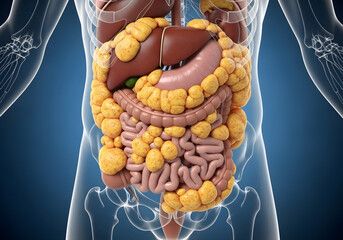
Visceral Fat: Why the Fat Around Your Organs Is More Dangerous Than What You Can See


EllieMD
5 min read
Visceral fat behaves differently from subcutaneous fat in ways that make it the most metabolically dangerous fat type. Here is what it does and why GLP-1 therapy targets it specifically.
Not all fat is the same. This is not a marketing phrase. It is a physiological fact with significant clinical implications for how weight-related health risk should be understood and why the specific pattern of fat distribution matters more than total body weight in predicting disease outcomes.
The distinction that matters most is between subcutaneous fat, the fat you can pinch beneath the skin, and visceral fat, the fat that accumulates inside the abdominal cavity around the liver, pancreas, intestines, and other organs. These two fat depots are metabolically and hormonally distinct, and visceral fat is the more dangerous of the two by a significant margin.
What Makes Visceral Fat Different from Subcutaneous Fat
Subcutaneous fat is largely inert in metabolic terms. It stores energy, provides insulation, and contributes to body shape. Its metabolic activity is relatively low, and while excess subcutaneous fat is a marker of overall positive energy balance, it is not itself a strong driver of metabolic disease.
Visceral fat is a metabolically active endocrine organ. It secretes a range of biologically active molecules including free fatty acids, cytokines such as interleukin-6 and TNF-alpha, and hormones including adiponectin, leptin, and resistin, in patterns that are quite different from subcutaneous fat. The specific profile of molecules that visceral fat produces drives the metabolic damage associated with central obesity.
The portal circulation is the anatomical reason visceral fat has such an outsized effect on liver and metabolic function. Blood draining the abdominal visceral fat depot flows directly into the portal vein, delivering its contents, including high concentrations of free fatty acids and inflammatory cytokines, straight to the liver before they reach the general circulation. This direct delivery is why visceral fat accumulation is so directly tied to fatty liver disease and insulin resistance.
The Systemic Inflammatory Effect
Visceral fat is a major driver of the chronic low-grade inflammation that characterizes metabolic syndrome and accelerates aging. The cytokines it produces, particularly IL-6 and TNF-alpha, circulate systemically and contribute to the inflammatory state that is associated with cardiovascular disease, insulin resistance, neuroinflammation, and accelerated cellular aging.
Research consistently shows that waist circumference, as a proxy for visceral fat, predicts cardiovascular risk and all-cause mortality better than body mass index alone. Two people with the same BMI can have dramatically different visceral fat levels and correspondingly different metabolic risk profiles depending on their fat distribution pattern.
Men tend to accumulate visceral fat more readily than premenopausal women, which partly explains the earlier cardiovascular disease onset in men. The menopausal transition removes estrogen's protective effect on fat distribution in women, which is why cardiovascular risk in women rises sharply after menopause and approaches that of men.
Why GLP-1 Therapy Specifically Targets Visceral Fat
GLP-1 receptor agonists produce fat loss that is disproportionately from the visceral depot compared to subcutaneous fat. This is one of the clinically important characteristics of the medication that does not show up clearly on a standard weight scale.
Research using imaging studies including MRI and CT scanning to specifically measure visceral fat volumes during GLP-1 therapy consistently shows significant reduction in visceral fat at weight loss levels that produce relatively modest subcutaneous fat changes. The mechanism is not entirely understood but appears to involve both the reduction in circulating insulin levels that GLP-1 therapy produces, which specifically favors visceral fat mobilization, and possible direct effects of GLP-1 receptor activation on adipose tissue in the visceral depot.
This means that for patients with significant visceral fat accumulation, the metabolic benefits of GLP-1 therapy can exceed what the scale weight change suggests. A patient who loses 12 pounds during early treatment may have lost a disproportionate amount of that from the metabolically dangerous visceral depot, with corresponding improvements in inflammatory markers, liver fat, and insulin sensitivity that represent significant disease risk reduction even before they have achieved their full weight loss goal.
For patients curious about whether their specific fat distribution is being addressed by their program, waist circumference is a practical measurement to track alongside scale weight. It is a more specific proxy for visceral fat change than total body weight and often shows meaningful improvement before the scale reflects equivalent progress.
Learn more at the EllieMD YouTube Channel.
Individual results may vary. All prescriptions require approval by a licensed medical provider. Compounded medications are not FDA-approved. EllieMD facilitates access to independent healthcare providers and pharmacies and does not provide medical care or dispense medications.
Related Articles
NAD+ Oral Drops with GLP-1: What the Combined Formulation Is Designed to Do
EllieMD

GLP-1 and Joint Pain: The Connection Between Weight, Inflammation, and Chronic Pain
EllieMD
What Prediabetes Actually Means and Why GLP-1 Therapy Is Relevant
EllieMD

GLP-1 Side Effects: What to Expect and How to Manage Them
EllieMD

GLP-1 and Testosterone: What Men Need to Know About the Hormonal Connection
EllieMD

How Does GLP-1 Work in the Body? A Plain-Language Explanation
EllieMD
Get the latest updates and exclusive offers by subscribing to our newsletter.
© 2026 EllieMD LLC. All rights reserved.
