


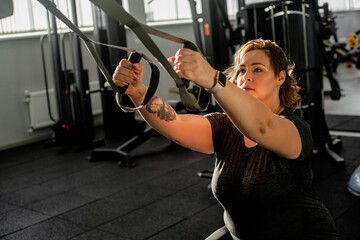
How to Exercise on GLP-1: Building a Training Plan That Protects Muscle


EllieMD
5 min read
Exercise on GLP-1 therapy requires a different approach than training under normal caloric conditions. Here is how to structure training to protect lean mass and improve body composition.
Exercise on GLP-1 therapy is worth thinking about differently than exercise under normal eating conditions. The caloric deficit that GLP-1 medications produce is real and often significant. That deficit changes the fuel environment in which your muscles are working and recovering, and it changes what kind of training produces the best results versus what might set you back.
Getting the exercise approach right on a GLP-1 program is one of the highest-leverage things you can do for your outcome, because it determines whether you lose mostly fat or a mix of fat and muscle.
Why Body Composition Matters More Than Scale Weight
The scale measures total body weight. It does not distinguish between fat and lean tissue. Two patients can lose the same number of pounds while arriving at dramatically different places depending on how much of that loss was fat versus muscle.
Losing mostly fat while preserving or building muscle produces better metabolic outcomes, better physical function, and results that look and feel meaningfully better than equivalent scale weight loss with high muscle loss. Muscle tissue raises resting metabolic rate, improves insulin sensitivity, strengthens bone, and enables the physical capabilities that constitute healthy aging.
GLP-1 therapy creates a caloric deficit that, without deliberate intervention, draws on both fat and lean mass. The ratio depends significantly on how much protein you consume and how much mechanical stimulus you give your muscles. Exercise is the mechanical stimulus. Protein is the building material. Neither works as well without the other.
Resistance Training Is the Priority
If you can only do one type of exercise on GLP-1 therapy, make it resistance training. Cardiovascular exercise burns calories and improves cardiovascular fitness, but it does not provide the mechanical signal that tells your muscles to maintain and build contractile tissue during a caloric deficit.
Resistance training, whether with weights, resistance bands, bodyweight, or machines, creates mechanical tension in muscle fibers that triggers muscle protein synthesis. This signal is what tells the body to preserve and build lean mass rather than allowing it to be broken down for energy alongside fat.
Three to four sessions per week of resistance training covering all major muscle groups is a reasonable target for most adults on a GLP-1 program. You do not need a gym. Effective resistance training can be done at home with minimal equipment. What matters is progressive overload, gradually increasing the challenge to your muscles over time, and consistency.
Cardio Has a Place, but Structure Matters
Cardiovascular exercise supports heart health, mood, and insulin sensitivity, all of which are relevant during a GLP-1 program. The question is how to include it without amplifying the caloric deficit to the point where lean mass is at risk.
High-volume intense cardio during a significant caloric deficit creates a large additional energy demand that the body may meet partly by breaking down muscle tissue. For most people on GLP-1 therapy who are already eating substantially less than usual, stacking aggressive cardio on top is counterproductive for body composition.
Moderate-intensity cardiovascular activity two to three times per week, including brisk walking, cycling, swimming, or similar activities, provides the health benefits without creating an energy demand that competes excessively with muscle preservation. This is a sustainable approach that complements the resistance training focus.
If you are an experienced endurance athlete, your situation is different, and your physician should be aware that you are training at volume so they can consider whether your protocol needs adjustment to support your energy needs.
Timing Considerations on GLP-1 Therapy
GLP-1 therapy changes your relationship with food before and after exercise in ways worth accounting for. The reduced appetite means that post-workout nutrition, which is important for muscle recovery and protein synthesis, can easily be neglected because you simply do not feel hungry.
Making a deliberate practice of consuming protein after resistance training sessions, whether you feel hungry or not, supports the recovery process that makes the training effective. This does not need to be a large meal. A sufficient protein source, whether food or a quality protein supplement, shortly after training is the practical goal.
Pre-workout fueling is less standardized but worth noting that training in a significantly under-fueled state can compromise workout quality, reduce the training stimulus, and promote muscle breakdown during the session. If you regularly train and find your performance is declining on GLP-1 therapy, your pre-workout nutrition is worth examining with your physician or a dietitian.
Adjusting Expectations for the First Few Weeks
The early weeks on GLP-1 therapy are often characterized by reduced energy as the body adapts to lower caloric intake and any GI side effects settle. This is not the time to attempt peak training performance. Maintaining movement and getting to the gym or completing workouts even at reduced intensity is the goal for the first several weeks, not setting personal records.
As the body adapts and appetite stabilization occurs, training capacity typically improves. Most patients find that their training quality is as good or better than before GLP-1 therapy within the first two to three months, particularly if they are more consistent due to improved energy from the weight changes.
Learn more at the EllieMD YouTube Channel.
Individual results may vary. All prescriptions require approval by a licensed medical provider. Compounded medications are not FDA-approved. EllieMD facilitates access to independent healthcare providers and pharmacies and does not provide medical care or dispense medications.
Related Articles
NAD+ Oral Drops with GLP-1: What the Combined Formulation Is Designed to Do
EllieMD

GLP-1 and Joint Pain: The Connection Between Weight, Inflammation, and Chronic Pain
EllieMD
What Prediabetes Actually Means and Why GLP-1 Therapy Is Relevant
EllieMD
GLP-1 Side Effects: What to Expect and How to Manage Them
EllieMD
GLP-1 and Testosterone: What Men Need to Know About the Hormonal Connection
EllieMD
How Does GLP-1 Work in the Body? A Plain-Language Explanation
EllieMD
Get the latest updates and exclusive offers by subscribing to our newsletter.
© 2026 EllieMD LLC. All rights reserved.
